Integrating the Garden Bouquet Name Sign SVG Cut File into Your Customization Workflow
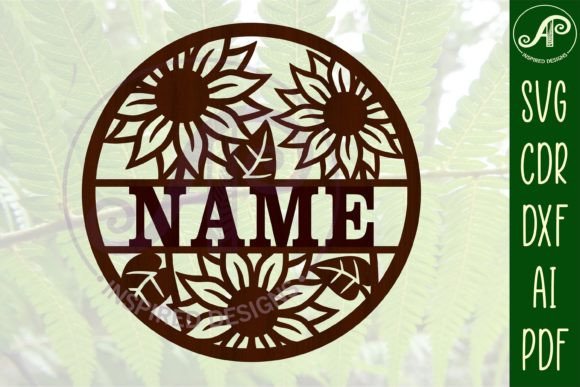
In the evolving landscape of digital fabrication and personalized decor, the efficiency of your design-to-production pipeline determines both your profitability and creative satisfaction. Whether you are a small business owner selling custom home goods, a hobbyist refining your craft skills, or a designer expanding your asset library, the quality of your source files dictates the quality of your final output. The Garden Bouquet Name Sign SVG Cut File represents more than just a decorative element; it is a structured digital asset designed to streamline the creation of personalized door or wall hangings. Understanding how to effectively integrate this file type into your broader workflow ensures consistency, reduces material waste, and enhances the professional finish of your projects.
Understanding the Asset Structure and Compatibility
Before initiating any cutting process, it is crucial to understand the technical specifications of the digital download. This particular asset is not a static image but a vector-based design package optimized for various computer-aided manufacturing (CAM) tools. The inclusion of multiple file formats—SVG, DXF, AI, CDR, and PDF—ensures compatibility across a wide spectrum of software ecosystems. For users operating laser cutters or CNC routers, the SVG and DXF formats are typically the primary interfaces, offering precise path data that machines interpret as cut lines.
The presence of AI (Adobe Illustrator) and CDR (CorelDRAW) files allows for deeper editing capabilities for designers who prefer working within native vector environments. This flexibility is essential for professionals who may need to adjust node points, modify curve tensions, or integrate the name sign into a larger composite design. By providing these formats, the asset supports a seamless transition from conceptual design to physical production, regardless of whether you are using LightBurn, RDWorks, LaserGRBL, or proprietary software associated with brands like Glowforge, xTool, or Epilog.
Preparation and Font Management
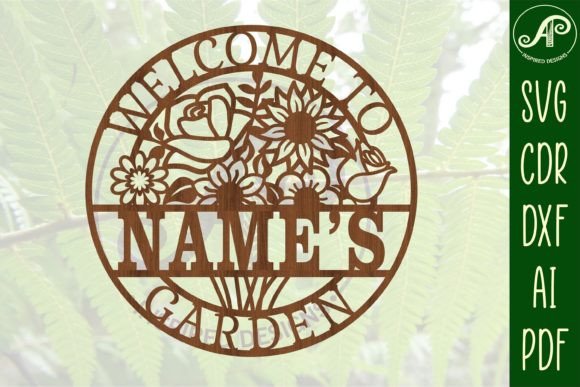
A critical phase in utilizing the Garden Bouquet Name Sign SVG Cut File involves typography management. The design preview often utilizes specific fonts, such as News705 BT, to demonstrate aesthetic potential. However, the practical implementation requires you to substitute this with a font that matches your brand identity or customer preference. It is important to note that while the floral elements are pre-vectorized, the text component usually requires manual linking or welding before the file is sent to the laser machine.
To maintain structural integrity during cutting, the name must be securely linked to the surrounding botanical design. If the text floats independently, small serif details or thin connections may break off during the weeding or handling process. In your vector software, use the "weld," "union," or "combine" function to merge the text layer with the bouquet frame. This creates a single, continuous cut path, ensuring that the name remains physically attached to the decorative elements. Additionally, selecting an all-caps font is recommended for stability, as lowercase letters with descenders can create weak points in the material structure.
Workflow Integration: From Download to Production
Efficient workflow integration begins immediately after purchase. Since this is a digital download, there is no physical shipping delay, allowing for instant project initiation. Upon downloading the zip folder, extract the contents to a dedicated project directory. Organizing your digital assets systematically prevents version control issues and ensures that you are always working with the correct file type for your specific machine.
Once the files are extracted, import the appropriate format into your design software. The design features exterior cut lines marked in blue, a standard convention in many laser cutting workflows to distinguish between cut paths, engrave areas, and score lines. Verify these color assignments in your software settings to ensure the laser interprets the blue lines as cut commands. This visual cue simplifies the setup process, reducing the likelihood of operational errors.
Scalability is another significant advantage of vector-based assets. Unlike raster images, which lose resolution when enlarged, the Garden Bouquet Name Sign SVG Cut File can be resized to any dimension without compromising edge quality. This allows you to adapt the design for various applications, from small desk plaques to large entryway statements. When resizing, maintain the aspect ratio to prevent distortion of the floral elements. Always check the minimum thickness of the connecting bridges after resizing; if the scale is too small, intricate details may become fragile or impossible to cut cleanly.
Material Selection and Machine Settings
The success of the final product depends heavily on the interaction between the digital file and the chosen material. This design is suitable for wood, acrylic, MDF, and other laser-compatible substrates. Each material reacts differently to laser heat and speed settings. For wood, a slower speed and higher power may be required to achieve a clean cut through thicker sheets, while acrylic benefits from faster speeds to prevent melting along the edges.
Conducting test cuts on scrap material is a best practice that saves time and resources in the long run. Use these tests to fine-tune your focus height, air assist settings, and power modulation. Pay particular attention to the interior corners of the floral design and the junctions where the name connects to the frame. These areas are prone to charring or incomplete cuts if the machine settings are not optimized. Documenting successful settings for different materials builds a reference library that enhances future efficiency.
Quality Control and Finishing Techniques
Post-processing is an integral part of the production workflow. After the laser cutting process is complete, carefully remove the sign from the machine bed. Use a weeding tool or fine-grit sandpaper to remove any minor char marks or loose fibers, particularly around the text edges. If the design was cut from wood, applying a sealant, stain, or paint can enhance durability and visual appeal. For acrylic, polishing the edges can restore clarity and provide a professional finish.
Quality control involves inspecting the structural integrity of the links between the name and the bouquet. Ensure that all connections are solid and that no unintended gaps exist. Consistency in finishing techniques ensures that each piece meets professional standards, which is vital for maintaining customer trust and brand reputation. Whether the item is intended for personal use or commercial sale, attention to these details distinguishes a high-quality product from a amateur attempt.
Long-Term Value and Design Versatility
Investing in versatile digital assets like the Garden Bouquet Name Sign SVG Cut File offers long-term value for creators. The ability to reuse and adapt the design for different clients, seasons, or marketing campaigns maximizes the return on investment. By mastering the integration of this file into your workflow, you develop a repeatable process that can be applied to other vector designs, enhancing your overall operational efficiency.
Furthermore, understanding the technical nuances of file formats, font linking, and machine compatibility empowers you to troubleshoot issues independently. This self-sufficiency reduces downtime and allows for greater creative experimentation. As you refine your process, you may choose to create variations of the design, such as adjusting the floral density or modifying the frame shape, using the provided AI or CDR files as a foundation.
In conclusion, the effective use of digital cut files requires a blend of technical knowledge and practical execution. By approaching the Garden Bouquet Name Sign SVG Cut File with a structured workflow—from preparation and font management to material selection and quality control—you ensure consistent, high-quality results. This methodical approach not only improves the immediate outcome of your projects but also strengthens your capabilities as a digital fabricator, enabling you to deliver professional-grade custom decor efficiently and reliably.