Alphabet Tracing Worksheets Design
In the realm of educational graphic design, clarity and structure are paramount. Alphabet Tracing Worksheets serve as more than just practice sheets; they are foundational tools in visual communication for early learners. When designed with precision, these resources bridge the gap between abstract letterforms and motor skill development, offering a seamless blend of functionality and aesthetic appeal.
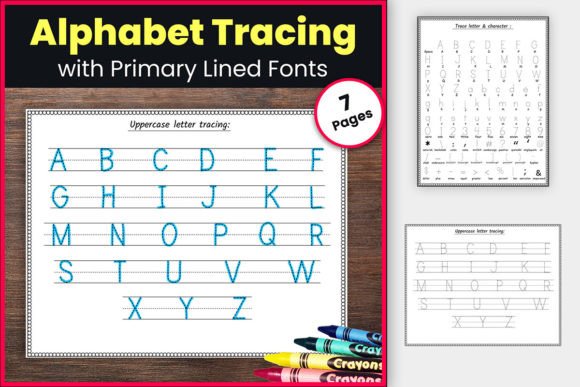
Enhance your child s learning with our TRACE ME Alphabet Tracing Worksheets. This comprehensive resource features primary lined fonts, perfect for preschoolers to practice letter tracing and improve handwriting skills effectively. From a designer’s perspective, the typography used in these materials must prioritize legibility and consistency. The TRACE ME font system is engineered to meet these exact needs, providing a clean, modern aesthetic that supports cognitive recognition without visual clutter.
The Role of Typography in Educational Design
Typography is the voice of written content. In educational materials, especially for young children, the choice of typeface directly impacts user experience (UX). A well-structured font guides the eye, establishes visual hierarchy, and reduces cognitive load. Our Alphabet Tracing Fonts - Primary Font TRACE ME Lined and Unlined Tracing Fonts resource is a valuable tool for parents and educators seeking to develop strong letter and number recognition skills in children.
The dual nature of this resource—offering both lined and unlined versions—demonstrates a deep understanding of diverse learning preferences. In graphic design terms, this flexibility allows for adaptive usage across different stages of skill acquisition. The lined version provides structural support, akin to a grid system in web design, while the unlined version encourages independence and creative freedom, similar to whitespace in minimalist layout design.
Key Design Features for Effective Learning
To ensure high-quality print design and optimal usability, several technical specifications must be met. These elements contribute to the overall professional presentation of the material:
- Primary Lined Fonts: Designed specifically to mimic standard handwriting guidelines, ensuring familiarity for students transitioning from guided practice to independent writing.
- Versatile Formats: The inclusion of both lined and unlined versions caters to different learning preferences and pedagogical approaches.
- Optimized Spacing: Perfectly sized blank lines provide the necessary room for practicing tracing skills, enhancing handwriting precision without crowding the visual field.
With engaging and practical worksheets, students can enjoy an effective learning experience. This engagement is not accidental; it is the result of thoughtful design decisions regarding spacing, weight, and contrast. Just as a brand identity relies on consistent visual elements to build trust, educational tools rely on consistent typographic structures to build confidence in young learners.
Technical Specifications and Print Readiness
For designers and educators integrating these assets into broader creative projects, technical reliability is non-negotiable. Poorly formatted files can disrupt workflow and compromise the final output. Our resource is built with professional standards in mind, ensuring compatibility with various design software and printing processes.
The specification details reflect a commitment to quality:
- Page Size: 8.5×11 inches, the standard for US letter paper, ensuring easy integration into binders and folders.
- High-Quality Print Ready: Files are optimized for crisp, clear reproduction, essential for maintaining the integrity of fine lines in tracing exercises.
- Format Variety: Includes two PDFs for direct printing, plus 8 PNG and 8 JPG files for digital use or custom layout integration.
- Bleed Setting: No bleed file included, simplifying the home or office printing process.
- Volume: 8 pages of core content, providing a concise yet comprehensive starting point.
Applications Beyond the Classroom
While primarily educational, the principles behind these tracing worksheets extend into broader graphic design applications. Understanding how primary fonts function can inform logo design, packaging design, and even UI design for children’s apps. The clarity required in a tracing worksheet mirrors the clarity needed in effective branding and visual identity systems.
Marketers and creators can draw inspiration from the simplicity and directness of these designs. In social media graphics or digital marketing campaigns targeting parents, using clean, readable typography enhances message retention. The visual harmony found in well-designed educational materials can be applied to editorial design and advertising campaigns to create a sense of order and professionalism.
Ultimately, the value of high-quality creative assets lies in their ability to communicate effectively. Whether you are developing a new brand identity, designing user interfaces, or creating educational content, the fundamentals remain the same: clarity, consistency, and user-centric design. By leveraging resources like the TRACE ME font system, designers and educators can ensure that their visual communications are not only aesthetically pleasing but also functionally robust, supporting learning and engagement at every step.